Borsch – More than just a soup: History, Tradition & Dispute
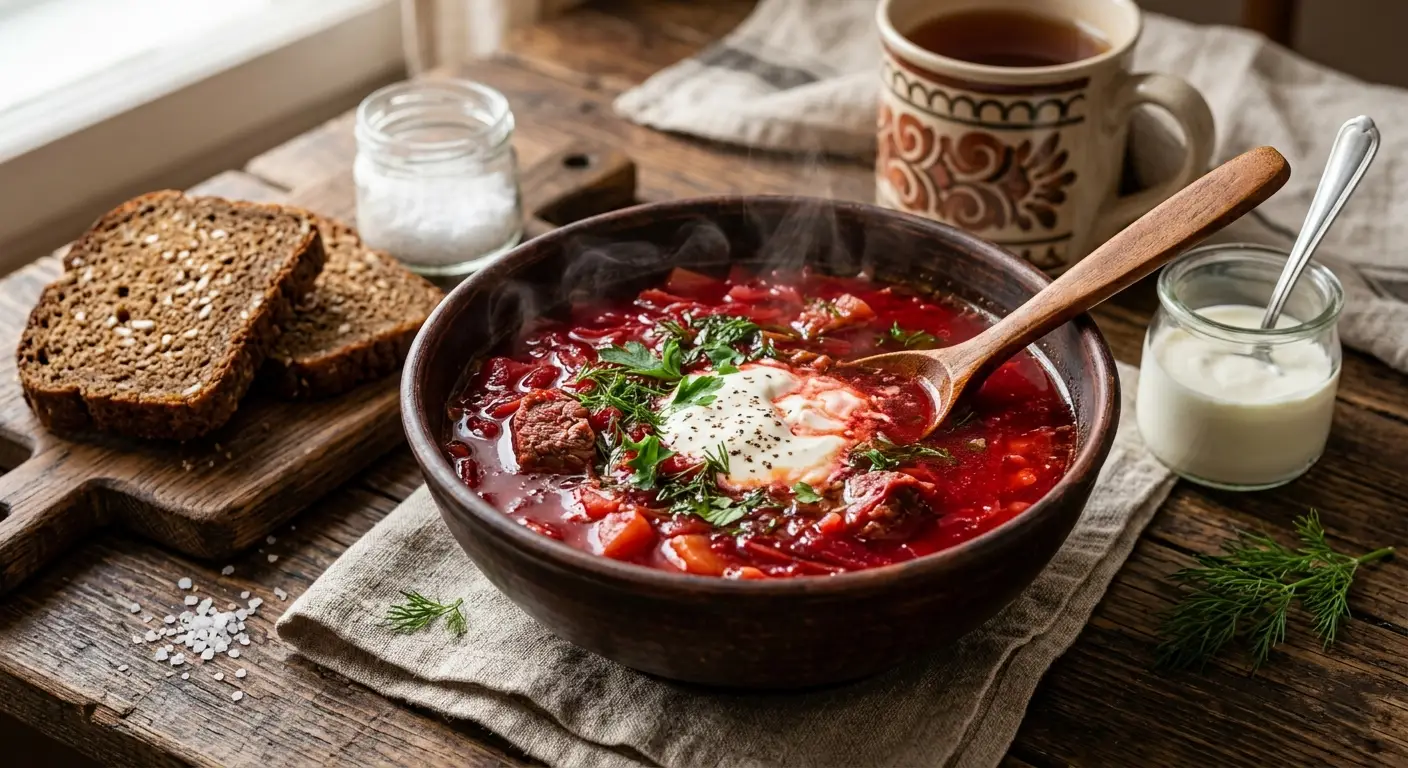
Borscht is not just a soup. It is a cultural symbol, a point of dispute in diplomacy and since 2022 officially part of the UNESCO World Heritage. But where does this ruby-red delicacy actually come from?
The Origin and the "Borscht War"
For centuries, borscht has been a staple food in Eastern Europe. For a long time, both Ukraine and Russia claimed the invention of the soup for themselves. This "Borscht War" reached a peak in 2022 when UNESCO recognized borscht as an endangered Ukrainian cultural heritage. Historically, the origin can indeed be found in the territory of today's Ukraine, where it was already cooked in the Middle Ages from "meadow hogweed" (a wild plant), before the beetroot began its triumph.
What makes a real borscht?
There are as many recipes as there are cooks – some even say it tastes different in every household. But the basis is almost always the same: a strong broth made of meat or mushrooms and the unmistakable vegetables.
The Soul of Borscht: The Vegetables
- Beetroot (Burok)
It gives the borscht its deep red color and earthy sweetness.
Find seeds in the shop - White Cabbage (Kapusta)
Provides structure and is filling. It tastes best from your own cultivation.
- Carrots & Onions
Finely diced and sautéed, they form the aromatic basis ("Sasharka").
A Tip for the Garden
If you want to cook your own borscht, there is nothing more satisfying than getting the vegetables directly from the garden. Our traditional seed varieties are particularly robust and have exactly the taste you need for an authentic soup.